Analysis
The Most Common Sponsor Licence Breach in 2026: Why 12 Care Providers Received Home Office Enforcement Action in One Week
By Sponsor ComplIANS · 25 June 2026 · 12 min read
12 min read
Quick Answer
If you are wondering what the most common sponsor licence breach is for UK care providers in 2026, based on the cases we are currently dealing with, it is this:
Sponsored workers are not being paid the salary stated on their Certificate of Sponsorship (CoS).
In most cases, this also creates a second breach because the salary change was never reported to the Home Office through the Sponsorship Management System (SMS).
Over the past two years, we have conducted more than 1,000 sponsor compliance audits and advised hundreds of care providers on Home Office compliance matters. The pattern has become increasingly clear. Most providers do not deliberately breach their sponsor duties. They simply do not have systems capable of identifying salary shortfalls before the Home Office does.
---
Key Takeaways
---
What Happened This Week
We have reached the end of the fourth week of June 2026.
During this week alone, twelve care providers contacted Sponsor ComplIANS after receiving Home Office enforcement action.
Eight had received sponsor licence suspension letters.
Four had received sponsor licence revocation letters.
That means two-thirds of this week's enquiries related to suspension and one-third related to revocation.
Whenever a new provider contacts us, one of the first questions I ask is: "How did you hear about us?"
Interestingly, almost every one of them told me they had been reading my emails for months. They appreciated the practical guidance. They found the case studies useful. They often forwarded my emails to colleagues.
But they never thought they would need my help themselves.
Like many providers, they assumed Home Office enforcement happened to other organisations. Until it happened to them.
Some received the now familiar email that begins:
"We are looking into concerns that suggest your current sponsored workers may not be receiving a salary that matches the salary stated on their Certificate of Sponsorship."
Others opened a sponsor licence suspension letter. Some opened a revocation letter.
At that point the conversation changes completely. It is no longer about preventing a breach. It becomes about trying to save a sponsor licence.
If you have received that email yourself, read our detailed case study on [what happens when the Home Office sends the "We Have Concerns" email]().
---
The One Breach Every Provider Had
Although every provider had different allegations, one issue appeared in every single case.
One. Two. Or several sponsored workers had not been paid the salary stated on their Certificate of Sponsorship.
Different providers gave different explanations:
Different explanations. Exactly the same breach.
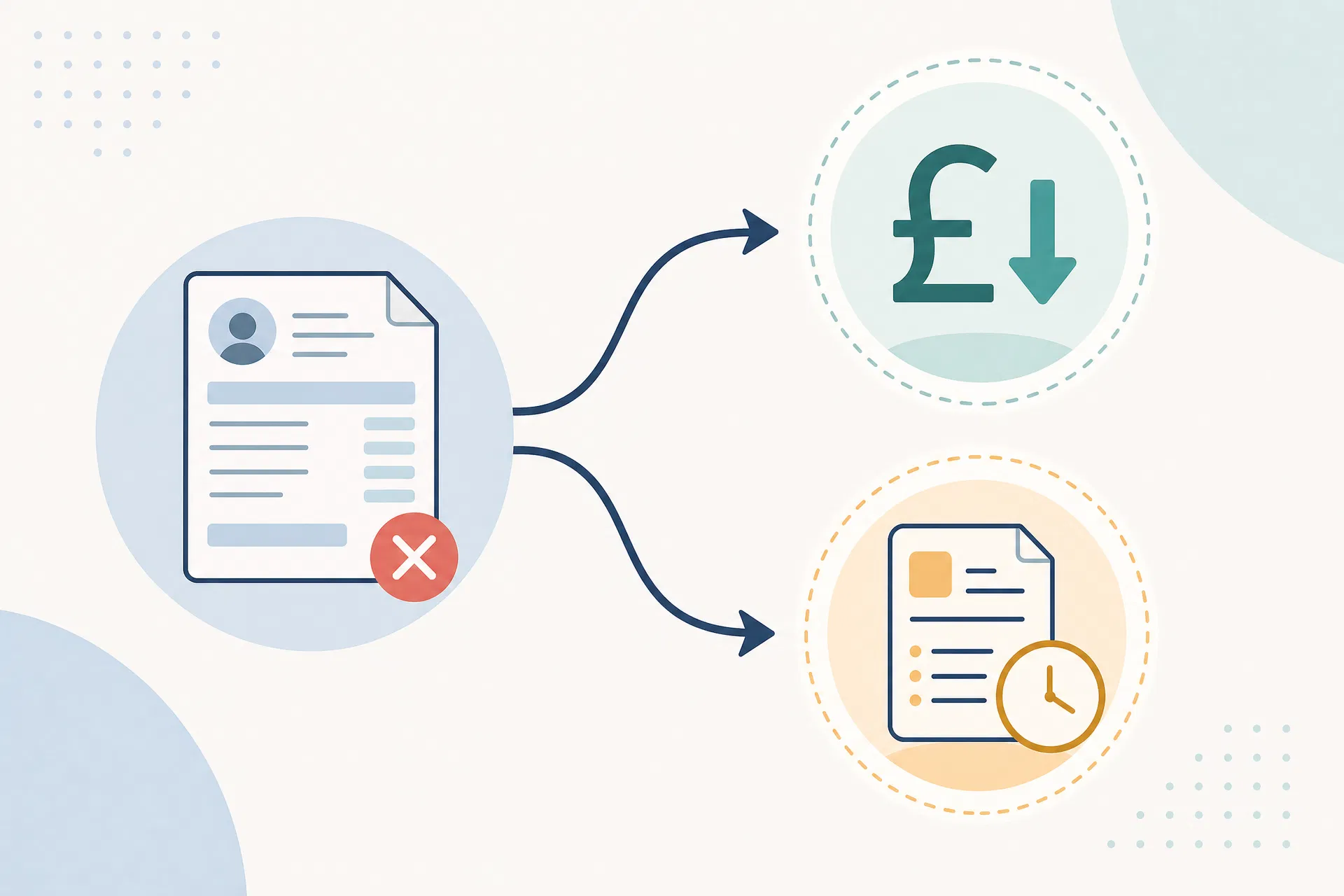
!One salary error creates two compliance breaches
That should concern every care provider holding a sponsor licence today.
---
What Is a Certificate of Sponsorship?
A Certificate of Sponsorship, commonly called a CoS, is an electronic record assigned by a licensed sponsor to support a worker's visa application. Amongst other things, it records:
The salary recorded on the Certificate of Sponsorship is not simply an administrative figure. It becomes one of the key benchmarks the Home Office uses when assessing sponsor compliance.
One of the simplest questions a compliance officer asks is: "Has this worker actually been paid the salary recorded on the Certificate of Sponsorship?"
Many providers believe the answer is yes. Unfortunately, after we review twelve months of payroll, contracts, offer letters and CoSs, we often discover that the answer is no.
For a detailed breakdown of CoS salary requirements, read our [CoS Salary Compliance Guide]().
---
Why Salary Underpayments Happen
One of the biggest misconceptions is that providers deliberately underpay sponsored workers. That is rarely what we see.
Based on the hundreds of payroll reviews we have carried out, most underpayments happen because providers believe payroll and sponsor compliance are the same thing.
They are not.
Payroll exists to pay workers.
Sponsor compliance exists to demonstrate that the worker has been paid exactly what the Home Office expects under the sponsorship arrangements.
Those are two very different exercises.
The Home Office is not asking whether payroll was processed correctly. It is asking whether the amount paid matches the amount you certified when you assigned the Certificate of Sponsorship.
That distinction catches many providers by surprise. We explored this exact scenario in our case note on a [UKVI salary mismatch concern]() that arrived during a live call with a client.
---
Why This Creates Two Sponsor Duty Breaches
Many providers believe an underpayment creates one breach. In reality, it often creates two.
Breach 1: The underpayment itself. The worker has not received the salary stated on the Certificate of Sponsorship.
Breach 2: Failure to report the salary change. Once the salary changes, you are generally required to notify the Home Office through the Sponsorship Management System within the prescribed timescale where the sponsor guidance requires reporting.
In many of the cases we reviewed this week, neither happened. The worker was underpaid. The change was never reported.
One payroll issue became two sponsor licence breaches.
That is why salary compliance has become one of the biggest enforcement issues facing the care sector. If you want to understand the scale of the problem nationally, our analysis of [1,948 sponsor licences revoked]() puts this in context.
---
The Question Every Care Provider Should Ask Today
Forget the Home Office for a moment. Ask yourself this.
Could you answer this question within five minutes?
"How many sponsored workers have been paid less than the salary stated on their Certificate of Sponsorship during the last six months?"
If your answer is "I'm not sure" or "I'd have to check" — then your systems are probably not giving you the visibility the Home Office expects.
And that is exactly where most enforcement action begins.
---
Free Salary Compliance Audit Tool
After seeing the same salary issues repeatedly, I decided to build something practical.
The Salary Compliance Audit Tool allows care providers to carry out an initial review before the Home Office does.
Simply upload the last six months of a sponsored worker's payslips, complete the assessment and submit it. The tool compares the information against sponsor guidance and the compliance patterns we have identified from hundreds of real cases.
It takes only a few minutes. The insight could save your sponsor licence.
Check Your Salary Compliance Now
Feel free to share the tool with other care providers. If it helps even one organisation identify a breach before the Home Office does, then it has achieved exactly what it was designed to do.
---
How the Sponsor Complians Hub Helps
The problems described in this article — gaps in documentation, misaligned records, missed reporting deadlines, and payroll inconsistencies — are exactly the compliance failures the Sponsor Complians Hub was built to prevent.
The Hub gives care providers a single platform to monitor sponsored worker files, track right to work expiry dates, reconcile salary evidence against Certificates of Sponsorship, and maintain audit-ready records at all times. Instead of scrambling to assemble evidence after a Home Office email arrives, providers using the Hub have structured, up-to-date compliance data available continuously.
Whether you are responding to an active compliance check, preparing for a visit, or simply want to know where your gaps are before the Home Office finds them — the Hub is designed to keep you ahead of enforcement, not behind it.
Join the Sponsor Complians Hub
---
Related Reading
_This article is provided for information only and does not constitute legal advice. All identifying details have been anonymised._